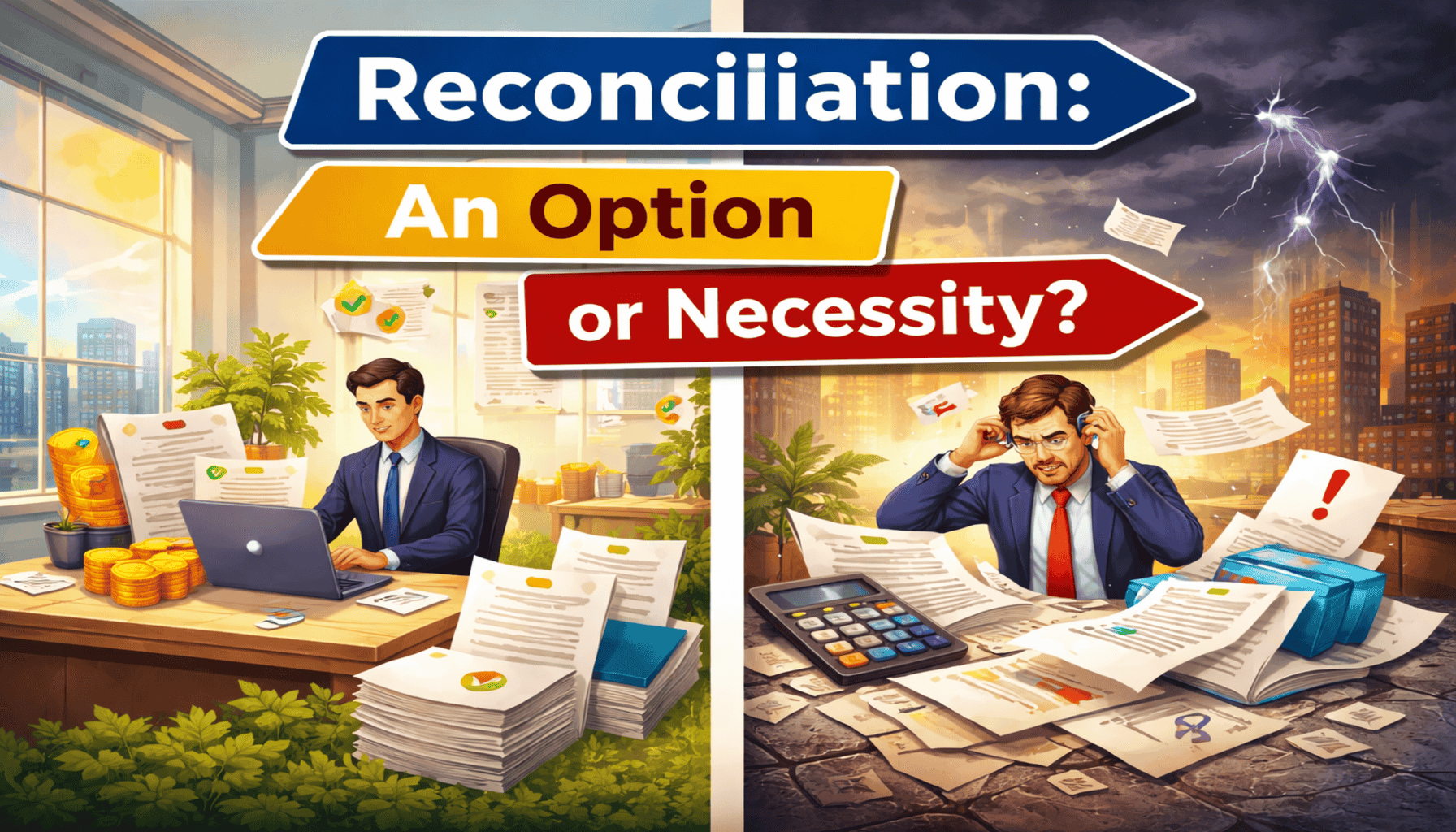
Last quarter, a finance controller confidently said during a review meeting: “We don’t really need separate reconciliation or invest in vendor reconciliation automation. Our ERP has checks, approvals, and system validations. Everything is controlled.” On paper, he wasn’t wrong. The organization had invested in a robust ERP system. Every invoice went through proper approval workflows. Payments required authorization. Entries were validated before posting. Internal audit reviewed processes periodically. Reports were generated accurately and on time. From a control standpoint, the framework looked solid. Nothing appeared broken, and no red flags were visible on dashboards
The system worked exactly as intended. Transactions were recorded correctly. Balances rolled forward every month. Management reports were generated automatically and reflected what the ledger showed.
However, during a routine quarterly vendor review, something didn’t add up. The vendor’s statement did not match the company’s ledger. In hindsight, the warning signs were already visible. Vendor queries were regularly escalated to the accounts team. The sales team often questioned receivable balances. Individually, these seemed like routine issues. However, together, they pointed to a deeper gap. Controls ensured entries were processed correctly. But no one verified whether both sides of the transaction were aligned.
That was when the newly appointed CFO stepped in and pushed for regular reconciliation.
Despite its importance, vendor reconciliation automation is still treated as optional in many organizations.
Let’s break down common beliefs around vendor reconciliation automation in businesses:
1. We are able to manage it manually
Organizations may manage reconciliation manually. However, is it worth spending resources on matching entries? Instead, those resources could focus on coordinating with vendors and customers to resolve open items. This requires follow-ups, judgment, and negotiation.Moreover, many open items tracked in Excel never make it back into the ERP. As a result, the same differences continue to recur.Most organizations also lack dedicated ownership for reconciliation. Therefore, it often takes a back seat until a dispute arises.
While vendors closely track their cash flows, internal teams may not show the same level of diligence. Without continuous control, businesses risk missing credit notes or accepting unnecessary debit notes. This directly impacts financial accuracy and cash flow.
2. We are using a vendor portal
Many organizations invest in vendor reconciliation automation through vendor portals. However, vendor adoption remains low. It often takes years to reach meaningful transaction volumes.As a result, critical information does not always flow through the system.For example, a vendor may raise a debit note and report it in GST. However, if it is not reflected in the portal, it remains unaccounted for in the company’s books.
In such cases, vendors can still claim compliance during disputes. Therefore, regular visibility into vendor books becomes essential.Without this visibility, discrepancies and disputes continue to persist.
3. We already have a payment advice system
Payment advice systems improve transparency. However, they only cover payments.A transaction involves multiple elements, including invoice booking, debit notes, credit notes, tax deductions, and GST adjustments. Payment advice does not cover these areas.Moreover, payment advice is one-sided communication. Vendors often lack a structured way to raise queries or disputes.
Additionally, most banks do not provide mechanisms to manage such interactions effectively.
4. Auditor does the process
Auditors perform reconciliation procedures. However, they typically rely on sampling and cover only a limited population.Discrepancies may exist beyond these samples. Moreover, audits occur annually. Therefore, they may not reflect the volume and frequency of transactions.It is also important to note that auditors aim to obtain reasonable assurance over balances. They do not validate every individual transaction.
Reconciliation and confirmations are only one of several methods auditors use. In some cases, auditors rely on alternative procedures without resolving all differences.
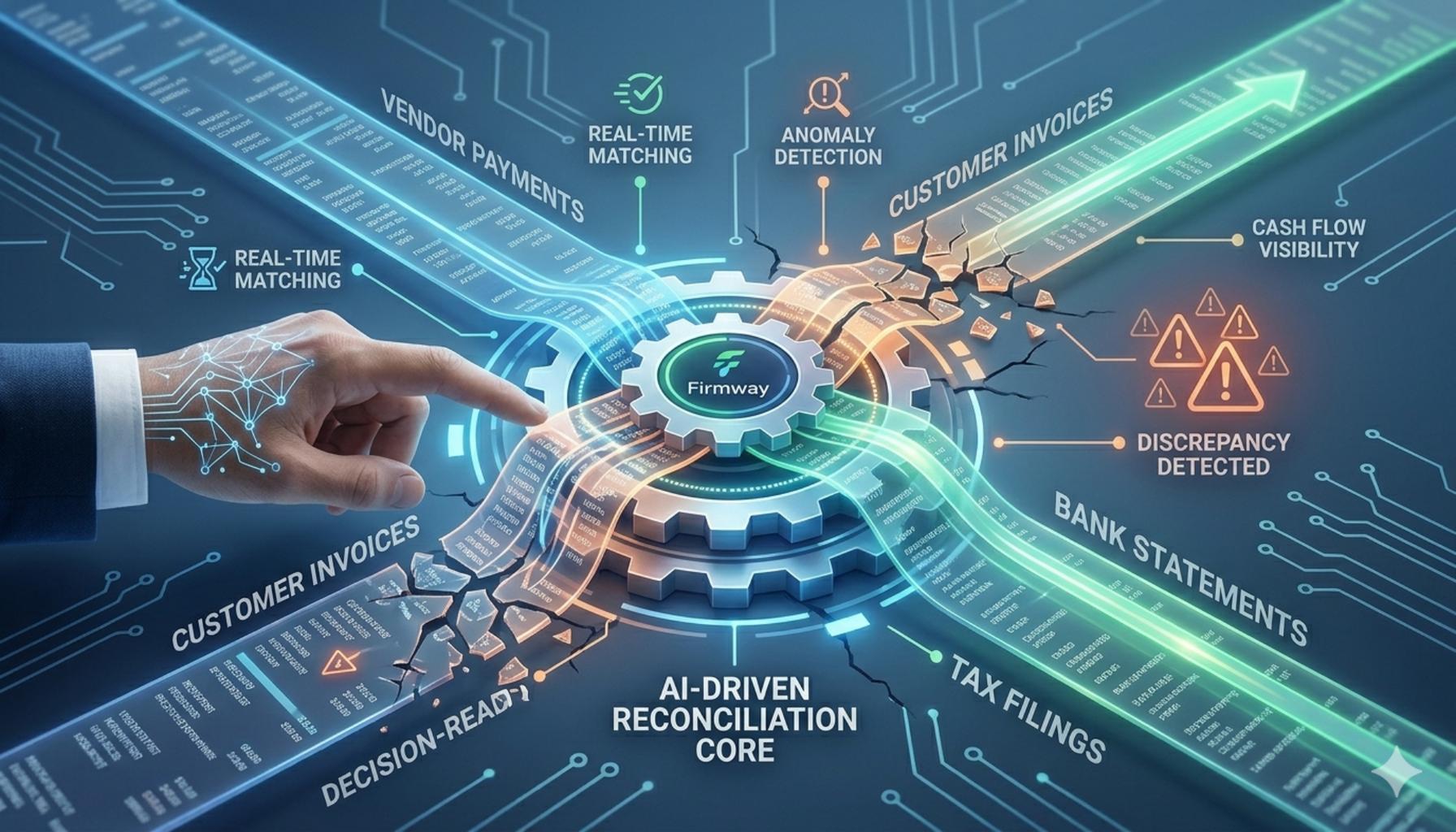
This is where vendor reconciliation automation plays a fundamentally different role.
Conclusion: Vendor Reconciliation Automation is not a duplicate control
It converts recorded transactions into decision-ready financial information.Therefore, the real question is not whether reconciliation is performed—but how and when it is done.If organizations treat it as an audit-time activity, discrepancies surface late. As a result, resolution becomes more complex and time-consuming.
On the other hand, structured vendor reconciliation automation identifies differences early. It enables systematic resolution and prevents issues from compounding. At Firmway, we help finance teams move away from reactive, manual reconciliation.
Our vendor reconciliation software brings real-time visibility, structured tracking, and early difference identification. As a result, vendor reconciliation automation becomes a proactive safeguard rather than a last-minute correction.
If reconciliation is still treated as optional in your organization, it may be time to evaluate whether your current controls are sufficient—or whether automation can strengthen them before the next discrepancy surfaces.


 5 Strategies to Improve Accounts Receivable Management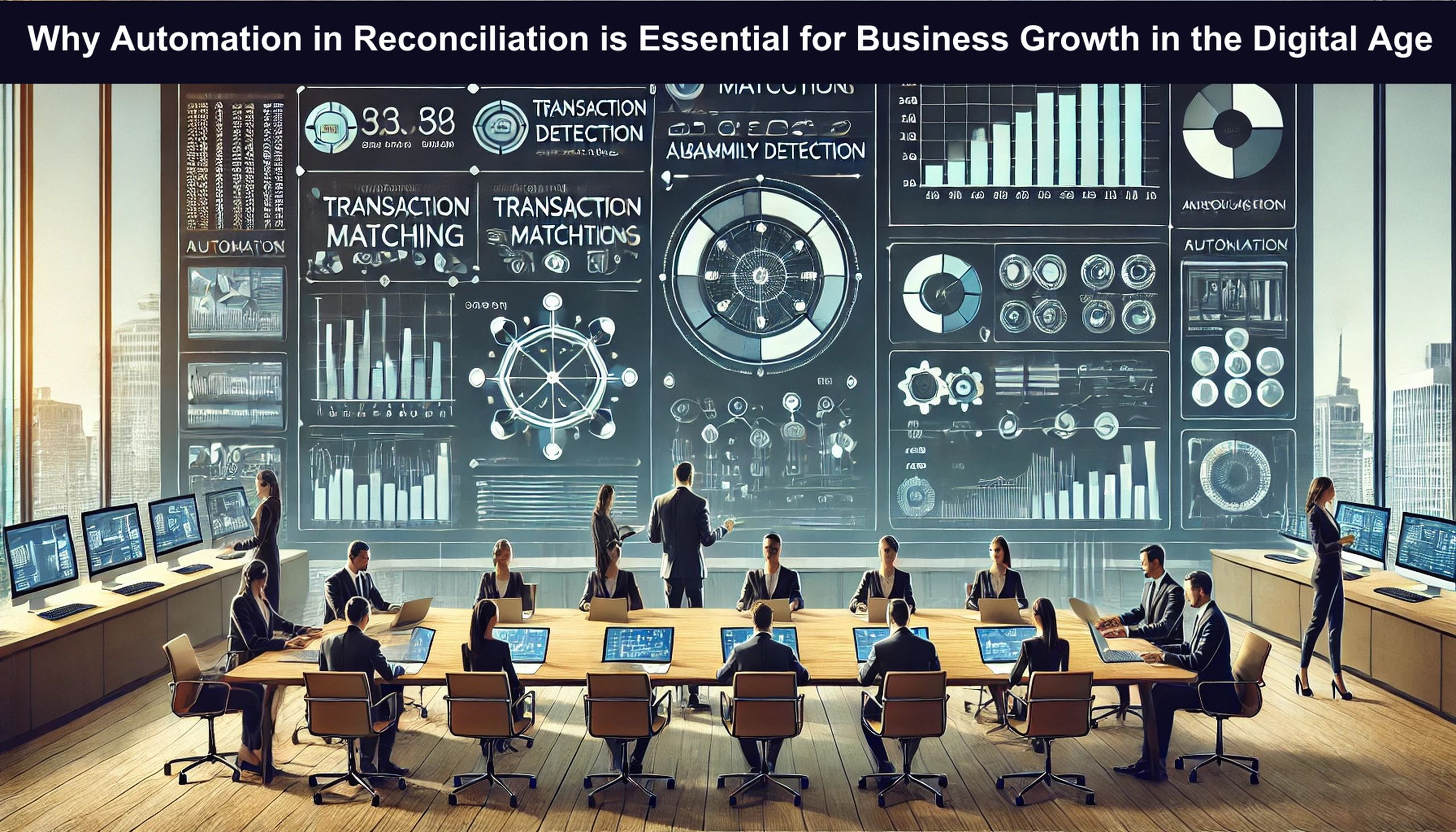
 Automation in Reconciliation for Digital Business :-