
Starting audits Early

Early Audit Benefits: Unlock Accuracy and Save Time

How Can Early Audit Benefits Improve Your Audit Process?”

Auditing is a critical process that ensures the accuracy and reliability of financial statements, essential for maintaining public trust and confidence in financial reporting. The auditor’s role is to examine the financial statements and provide an independent opinion on their accuracy and fairness. However, this process can be time-consuming and complex and auditors face various challenges during the audit process. To tackle this challenges starting the audit early brings Early Audit Benefits, such as better planning and flexibility, which improve the overall process.

Discover the Early Audit Benefits That Improve Accuracy

Starting audits early not only provides extra time for completing the same but also increases audit effectiveness. Here are some of the major benefits of starting audits early:

  • Effective Planning :-

    The first and foremost reason why auditors should start their audits early is effective planning. It is the initial and crucial component of the audit process. Auditors must carefully plan the audit carefully to ensure that it is conducted effectively and efficiently. Starting the audit early provides the auditor with sufficient time to plan the audit effectively. This includes gathering all the necessary information and resources required for the audit, reviewing the previous year’s audit reports, and understanding the client’s business. With effective planning, the auditor can better understand the client’s business operations, identify any potential risks or issues, and determine the scope of the audit.

  • Early Detection of Issues :-

    Starting the audit early provides auditors with sufficient time to identify and address issues that may arise during the audit process. Early detection offers an opportunity for auditors to investigate and resolve issues before they escalate into significant problems. For example, if auditors identify a potential fraud risk during the planning stage, they can thoroughly investigate it and develop appropriate audit procedures to address the risk.

  • Flexibility :-

    Starting an audit early provides auditors with greater flexibility in scheduling. It allows auditors to work around the client’s schedule and address any unexpected issues that may arise during the audit process. For instance, if the client is unavailable during the scheduled audit period, auditors can adjust their schedule accordingly to ensure timely completion. Additionally, if unexpected issues arise during the audit process, auditors can adjust audit procedures to address them, which is easier with more time available.

  • Reduced Stress :-

    Starting an audit early reduces stress for both auditors and clients. There is less pressure to complete the audit on time, reducing the likelihood of errors or oversights. If auditors start an audit too late, they may rush through procedures to meet the deadline, resulting in mistakes. This can cause stress for clients, worrying about the accuracy and completeness of their financial statements. By starting the audit early, auditors can avoid these issues and provide a more accurate and thorough audit report.

  • Improved Quality of the Audit :-

    Starting an audit early improves the quality of the audit by allowing auditors to conduct a more thorough and comprehensive review of the client’s financial statements and accounting practices. With more time available, auditors can review financial statements and accounting records in more detail, leading to a more accurate and complete audit report. Additionally, auditors can perform more substantive testing to verify the accuracy of financial statements and identify potential errors or misstatements.

Early Audits Benefits

How Early Audit Benefits Can Make Your Audits Seamless

One of the most important functions of an audit is confirmation and reconciliation, which can be a cumbersome and time-consuming process. Automating these processes allows auditors to focus on essential elements of the audit. But how can both these processes be automated?

Auditors have been relying on Firmway for automating their Confirmation and Reconciliation processes. Firmway offers a useful, scientific, and comprehensive solution for External Confirmations. Becoming tech-savvy and conducting audits using the latest tools and software has become paramount for the effective, accurate, in-depth, and timely completion of audits. Firmway provides various modules like Balance Confirmations, MSME Confirmations, TDS Reconciliation, and purchase register reconciliation, etc., to seamlessly match the books with reported information and external parties. Are you auditing your clients with Firmway?

Enhance your audit process—start early and leverage Firmway’s Automation for a seamless and effective auditing experience.

Digital Transformation

Digital Transformation: Breakthrough Roadblocks Now

Digital Transformation – Importance and Roadblocks Ahead

Technology is changing the way businesses operate. Leveraging technology has become key to remain relevant. Technology is the catalyst for automating business processes and improving efficiency. However, digitization has its own set of challenges. Here’s why digitization is more of a necessity than a choice for businesses and what can be the roadblocks when undergoing digital transformation.

Importance of Digitization

To understand the importance of digitization, let’s take a quick look at how the world is responding to the same:

Following are some of the key points that highlight the importance of digitization:

  • Saving Costs: Digitization can help you save a ton of costs in the long run. Managing everything physically using traditional methods only adds to the cost, effort and space. While transitioning from old methods to new ones might invite certain initial costs, it will reward in the long run.
  • Better Efficiency: Digitisation and using technology for automation leads to better productivity and efficiency. With everything being digitized, the time required to perform tasks reduces to a fraction of what it required earlier.
  • Warding Off Risks: There are various risks associated with traditional methods. Digitisation ensures confidentiality as access can be controlled. Further, it also ensures disaster recovery with proper backup mechanisms in place.
  • Higher Accuracy: The core foundation of digitization is minimizing human involvement. Humans are prone to errors. As digitization reduces human intervention, the chances of errors decrease manifold.

Digital Transformation

Roadblocks in Digitization

As stated earlier, digitization too has its own set of challenges. Following are the major roadblocks an organization might face while implementing digitization:

  • Lack of Shared Vision: One of the key drivers of digitization is automation. There might be resentment from employees over the fear of losing jobs due to automation. There needs to be a shared vision towards the development of the organization. Digitization is a team game. There should be a clear demarcation of duties and responsibilities.
  • Upskill Talent: Learning is paramount for growth and prosperity. As the world transforms digitally, organizations need to continuously upskill and train their workforce to adapt to changing environments.
  • Lack of Courageous Leadership: Leaders are the catalyst of change. Leaders define, design and shape their workforce’s vision. Therefore, they need to welcome the changes brought by digital transformation.
  • Initial Costs: There might be certain initial costs due to the transition. However, the organisations need to understand that in the long run, the benefits will outweigh the cost.

How Firmway is Bringing Digital Transformation?

Firmway is bringing digital transformation into the accounting functions by allowing businesses to automate Balance Confirmations, MSME Confirmation, Auto Reconciliation, data collection management. Whether it is about reconciling ledgers, Firmway does it all. It’s time you also automate your accounting functions the Firmway!

Cloud Computing

Cloud Computing – the need for new-age technology

Cloud Computing: The Key to Post-Covid-19 Resilience

While cloud adoption had been on the rise for several years, recent global disruptions such as the Covid-19 pandemic, semiconductor shortages, and geopolitical conflicts like the Ukraine-Russia war served as pivotal moments in showcasing the importance of cloud transformation for business continuity and supply chain resilience. These events had a significant impact on businesses, making it evident that Cloud Computing was the way forward. According to the Deloitte Cloud Imperative – Asia Pacific report, cloud technology is projected to contribute a staggering USD 160 billion to GDP from 2020 to 2024, with cloud investments growing at an impressive 28% annually until 2024. This growth is a testament to how the cloud has evolved since the challenges posed by Covid-19 and other disruptions.

The Shift: From On-Premise to Cloud Computing

Before diving into why organizations are increasingly moving from on-premise solutions to cloud-based infrastructure, it’s essential to understand the fundamental differences between the two:

Cloud Computing

Cloud computing offers virtual, convenient, and on-demand access to a shared pool of computing resources. Additionally, data and applications are accessible and stored in virtual platforms hosted over the internet, eliminating the reliance on physical hard drives.

On-Premise

On-premise infrastructure involves organizations hosting and managing their IT resources internally.

Why Cloud Computing Prevails Post-Covid-19

In this era of advanced technology, transitioning to the cloud offers several compelling advantages that have become even more apparent post-Covid-19:

1. Cost Optimization

Cloud computing offers virtual, convenient, and on-demand access to a shared pool of computing resources. Furthermore, data and applications are accessible and stored in virtual platforms hosted over the internet, eliminating the reliance on physical hard drives.

2. Remote Accessibility

The Covid-19 pandemic emphasized the critical need for remote work capabilities; furthermore, cloud solutions enable secure access to files and data from anywhere at any time. According to EY’s ‘Cloud as a Driver of Business Transformation in 2022,’ 75% of enterprises are adopting cloud technology to facilitate remote work.

3. Scalability

Cloud computing empowers organizations to swiftly adapt to new trends, process vast amounts of data, and adjust capacity as needed. In contrast, on-premise infrastructure involves time-consuming processes for acquiring and scaling new equipment. EY’s report cites business growth and development as a key driver for cloud adoption.

4. Security

Security concerns often arise in discussions about cloud-based services. However, data security largely depends on the chosen service provider. Continuous updates to security controls, in addition to advanced algorithms and computing capabilities, ensure data safety. Furthermore, cloud service providers prioritize risk assurance through ongoing enhancements

5. Encourages Innovation

Cloud-service providers regularly introduce updates and features that enhance user experiences. By transitioning to the cloud at affordable prices, enterprises can leverage the latest technologies, such as artificial intelligence and machine learning, fostering innovation within their organizations. These emerging technologies fuel innovation in the enterprise sector.

Cloud ComputingConclusion: Embrace the Cloud for Digital Transformation

The cloud serves as the foundation of digital transformation. The challenges posed by events like the Covid-19 pandemic accelerated the adoption of cloud technology, underscoring its transformative power. Cloud infrastructure adoption spans various sectors, including healthcare, pharmaceuticals, banking, finance, and information technology. It is now more important than ever to join the digital transformation movement and stay ahead of the curve.

MSMEs

Timely Payments to MSMEs: Impact of Budget 2023-24

Introduction and Budget 2023-24 Highlights

The Indian government’s unwavering commitment to promote Micro, Small, and Medium Enterprises (MSMEs) growth remains a cornerstone of economic development. This sector significantly contributes to employment, production, and exports, making it a focal point in the recent Budget 2023-24. In her recent Budget 2023-24 speech, Finance Minister Nirmala Sitharaman introduced pivotal measures, consequently aiming at incentivizing timely payments to MSMEs. Now, let’s delve into the key proposals, thereby shaping the landscape for MSMEs in India.

Understanding the Proposed Clause

A critical aspect of the budget is the proposed insertion of clause (h) in  section 43B of the Income Tax Act. This clause dictates that any sum payable to a micro or small enterprise beyond the time limit specified in Section 15 of the Micro, Small and Medium Enterprises Development (MSMED) Act 2006 is deductible only upon actual payment.

The MSMED Act 2006 defines the time limit for payments as 45 days from the date of acceptance or the date of deemed acceptance of any goods or services.

Empowering MSMEs

The new clause not only promotes timely payments but also bolsters the bargaining power of MSMEs in negotiations with larger businesses. This is a significant stride towards creating a more equitable business environment.

Challenges in Identifying MSMEs Vendors

Despite these positive develop ments, identifying MSME vendors poses challenges due to turnover limit fluctuations and UDYAM certificate migrations. The need for a reliable solution is evident.

Timely Payment to MSMEs: Key Budget 2023-24 UpdatesFirmway’s MSME Confirmation Software

To address this issue, the introduction of Firmway’s MSME confirmation software comes as a great relief for enterprises. The software helps enterprises identify the MSME status of their vendors, collect UDYAM certificates, and validate them using OCR technology.

By using Firmway’s software, enterprises can ensure that they are not only making timely payments to MSMEs but also saving them from incorrect information pass by MSME vendors.

The software efficiently streamlines the process of identifying MSMEs, consequently eliminating the need for manual verification and significantly reducing the chances of making mistakes.

Conclusion

In conclusion, the Indian government’s initiative to promote timely payments to MSMEs. Firmway’s MSME confirmation software and, consequently, go hand in hand in promoting the growth and development of this vital sector. Additionally, the software provides a simple and efficient solution to the challenge of identifying MSME vendors. Consequently, it aids enterprises in taking advantage of the tax benefits offered by the government.

  • Data collection with customized forms and follow-ups
  • MSME confirmations to help you know whether an entity is an MSME or not

It is time for all our readers to accelerate processes in their respective companies through efficient automation. Click here if you wish to take help.

Automate TDS Reconciliation with Firmway: Benefits & Challenges

TDS Reconciliation Made Easy: The Benefits Of Automated Solutions

Why companies need to Automate TDS Reconciliation?

Customers deduct TDS on every sale of goods and services above a certain limit, requiring TDS reconciliation. Companies need to reconcile TDS periodically by extracting transaction data from Accounting Software as well as 26AS form from the government portal to ensure that the client has given proper credit and avoid penalties and audit risk. The TDS and TCS that are eligible for credit are reflected in the statement while reconciling with the ledgers.

The deductee pays the amount stated in the statement as advance tax, making it eligible for credit. Hence, matching the amount with the TDS/TCS in the receivable ledgers of the deductee is of utmost importance. If you are doing it manually, the process is very vast, but Firmway can help you automate TDS reconciliation in 60 seconds.

TDS Reconciliation

Unlocking Efficiency: The Role of Automated TDS Reconciliation

The majority of organizations today manually perform this crucial process. A survey revealed that Tax managers dedicate, on average, at least 8 hours a week to manual data tasks, with 25 percent reporting spending over 20 hours a week on such tasks.

In another survey of over 280 companies, respondents reported that they could eliminate a large part of inefficiencies by using automated tools, with 62 percent indicating this. Just like the other financial functions, TDS reconciliation is faced with a similar fate. Accurate reconciliation of TDS credit reduces the tax burden and ensures no loss of TDS credit. However, due to manual intervention, faces the following challenges:

Challenges spelled out 

  • The possibility of manual errors in inputting amounts while filing returns can result in a mismatch.
  • For a deductee with a large number of customers, matching amounts is a herculean task.
  • The frequent updates to 26 AS make it time-consuming to reconcile and track on Excel worksheets.
  • Adopting manual work involves different people and their different ways of working. This lacks standardization and discipline. Communication usually happens over email and is easy to falsify or spread misinformation.
  • Proactive tracking of discussions with the tax deductor or collector for corrections due to identified mismatches. Teams in finance need to manually communicate over endless emails and calls.
  • Version control of Excel sheets and other documentation can cause issues in many instances.
  • While working in a manual model, you might keep the reports in disparate places.
  • The booking of TDS in the books of the deductor and deductee can be for different periods. Time differences spill over from one quarter to another quarter in the form of 26AS, causing further discrepancies.

Automating this process will enhance accuracy for 26 AS and significantly reduce time spent processing low-value-adding activities. It also enables us to manage TDS and TCS credits as per Form 26AS and books of accounts and almost nullify leakages.

What are the benefits of automating the reconciliation process? 

Running a tax department equates to having a plethora of responsibilities, especially concerning compliance and regulations like TDS. However, using reconciliation automation tools helps expedite the reconciliation process and closure while also improving compliance, enhancing accuracy, and promoting transparency.

  • Firmway’s 26 AS Reconciliation Software is also one such piece of software that makes the reconciliation process seamless for the organization.
  • Maps the TAN number with the PAN number for reconciling
  • It can reconcile large volumes in 60 seconds.
  • With the flexibility, it offers in quarterly, half-yearly, and annual reconciliations, it highlights mismatches and classifies entries into different buckets for ease of operations.
  • Efficiently manages communication with parties and generates actionable reports as and when required

Automation of the reconciliation process is truly the need of the hour for any business. With manual processes, it’s difficult to scale in response to the reconciliation when there is an increase in transactions. However, automation of the process makes the entire process effortless.

Atmanirbhar Bharat Abhayan – Benefits for MSME

Atmanirbhar Bharat Abhiyan : Empower MSMEs for Growth

Benefits  For MSME Definition of MSME Changed Under Atmanirbhar Bharat Abhiyan

Existing MSME Classification

Criteria: Investment in Plant & Machinery or Equipment

ClassificationMicroSmallMedium
Mfg. EnterprisesInv. < Rs. 25 lacInv. < Rs. 5 cr.Inv. < Rs.10 cr.
Services EnterpriseInv. < Rs. 10 lacInv. < Rs. 2 cr.Inv. < Rs. 5 cr.

Revised MSME Classification

Composite Criteria : Investment And Annual Turnover

ClassificationMicroSmallMedium
Manufacturing & ServicesInv. < Rs. 1 cr.
and
Turnover < Rs.5 cr.
Inv. < Rs. 10 cr.
and
Turnover < Rs.50 cr.
Inv. < Rs. 20 cr.
And
Turnover < Rs.100 cr.

Now that we’ve covered the MSME classifications, let’s turn our attention to the major benefits provided under the Atmanirbhar Bharat Abhiyan

Major Benefits for MSME :-

  • Collateral Free automatic loan to MSME up to 20% of entire outstanding credit as on 29th February 2020. Borrowers up to Rs 25 crore outstanding & turnover up to Rs. 100 crore are eligible. Loans for 4 years with a moratorium of 1 year of principal repayment. No guarantees required. Scheme can be availed till 31st October 2020.
  • CGTMSE with the support of 4000 Cr from Govt, will give partial credit guarantee to bank to allow them to give debt to promoters of MSME, who then will infuse the fund as equity.
  • 50,000 crore equity infusion for expansion of MSME through Funds of Funds.
  • Government will facilitate provision of Rs 20,000 crore subordinate debts for Stressed MSME which are NPA or stressed.
  • Receivables from Govt and CPSEs to be released in 45 days.
  • Global tenders will be disallowed in Government procurement tender upto Rs 200cr.
  • E market linkage for MSME to be promoted.

Atmanirbhar Bharat Abhiyan Tax Changes :-

  • All TDS and TCS rates reduced by 25% for Non-Salaried Resident Payments. Reduction is applicable from 14th May 2020 to 31st March 2021.
  • All refunds to non-corporate business & profession to be issued immediately.
  • All Income tax returns due date extended to 30th November 2020.
  • Tax audit due date extended to 31st October 2020.
  • All assessment getting barred on 30th September 2020 extended to 31st December 2020
  • All assessment getting barred on 31st March 2021 extended to 30th September 2021
  • Vivid Se Vishwas Scheme extended to 31st December 2020 without any additional payments.

EPF Benefits :-

Establishment Under Pradhan Mantri Garib Kalyan Package (PMGKP):

  • EPF relief extended for the month of June, July & August and will be paid by Government.

Other Establishment covered by EPFO

  • Statutory PF contribution of both employer and employee will be reduced to 10% from 12% for next 3 months (except CPSEs & PSU’s employer’s contribution).

NBFCs :-

  • Government will launch a Rs 30,000 crore Special Liquidity Scheme for NBFCs/HFCs/MFIs. Under this scheme investment will be made in both primary and secondary market transactions in investment grade debt paper of NBFCs/HFCs/MFIs. Securities will be fully guaranteed by Government.
  • Rs 45,000 crore Partial Credit Guarantee Scheme 2.0 for NBFCs/HFCs/MFIs. First 20% of loss will be borne by Government. AA paper & below will be eligible for investment.
  • PFC/REC to infuse liquidity of Rs 90,000 cr to DISCOMs against receivables
  • Central Public Sector Generation Companies shall give rebate to Discoms which shall be passed on to the final consumers (industries).

RERA :-

  • Treat COVID-19 as an event of ‘Force Majeure’under  RERA.
  • Extend the registration and completion date suo-moto by 6 months.
  • Regulatory Authorities may extend this for another period of upto 3 months, if needed.
  • Issue fresh ‘Project Registration Certificates’ automatically with revised timelines.
  • Extend timelines for various statuary compliances under RERA.

Contractors :-

  • PSU contracts to be extended for upto 6 months so that contract may be completed including for PPP contracts.
Price Waterhouse banned from auditing listed firms for 2 years

How to Prevent SEBI Audit Penalty With Confirmation Tool

One of the most unprecedented order in the country “Price Waterhouse banned from auditing listed firms for 2 years”

Overview of the SEBI Order:

On January 10, 2018, SEBI took the unprecedented step of banning all 11 Price Waterhouse (PW) firms in India from issuing audit and compliance certificates for listed companies and intermediaries for two years. This decision was coupled with a SEBI audit penalty of Rs. 13 crores, including 12% interest on the wrongful gains made by Price Waterhouse and its partners S. Gopalakrishnan and Srinivas Talluri.

Few findings from the investigation carried out by SEBI in Satyam Computers Services Limited (SCSL) wherein “systemic problem” in the audit processes were noted, have been excerpted below:

Inflated Cash/Bank Balances of Rs. 5,040 Crores

  • The auditors failed to independently verify the bank statements and fixed deposits.
  • They also did not maintain necessary control over the process of sending and receiving balance confirmations from banks. This was in complete disregard of the Auditing and Assurance Standards (AAS) prescribed by ICAI.
  • Moreover, they relied on the balance confirmations from SCSL, which had glaring anomalies and huge discrepancies, without further inquiry or examination. This led to the misreporting of account balances.

Inflated Sales Revenues Using 7,588 Fake Invoices

  • The auditors failed to verify invoices, which resulted in inflated sales revenues by accounting for 7,561 fake invoices and 27 invoices linked to non-existent customers.

Overstated Debtors’ Position by Rs. 490 Crores

  • The auditors did not seek external confirmation from the debtors. This was a violation of their own audit manual and provisions in AAS.

SEBI audit penaltyFirmway’s Role in Preventing Similar Issues
SEBI’s order came into effect immediately, but for operational ease, it did not impact audit assignments for FY 2017-18. Price Waterhouse has since expressed confidence in obtaining a stay on the SEBI order.

However, this case has sent a clear message from SEBI: wrong practices and market abuse will not be tolerated in India.

At Firmway, we believe in supporting auditors to comply with auditing standards. External confirmations are a powerful and reliable audit tool that provides more reliable audit evidence. Over the past two years, we have developed a robust, high-quality Audit Confirmation Tool that helps auditors obtain direct confirmations from the parties involved. Additionally, to help identify fake entities, we offer a verification service to ensure that the entities involved are legitimate.

To learn more about our services and how we can help you maintain audit compliance and prevent penalties, please visit firmway.in.

Audit Confirmation Process

Audit Confirmation Process: Pitfalls & How to Fix Them

Audit Confirmation Process: Common Pitfalls and a Better Way

In the realm of financial audits, undoubtedly, audit confirmation process plays a crucial role by verifying the accuracy of financial statements and thereby ensuring the credibility of an organization’s financial position. In addition, they act as a fundamental tool for auditors to confirm the existence, ownership, and accuracy of various financial balances and transactions. However, the traditional manual processes used to obtain these confirmations often come with significant challenges that can impact the reliability and efficiency of the audit.

Why the Audit Confirmation Process Matters

Audit confirmations are vital for maintaining the integrity and accuracy of financial reports. They provide external evidence that supports the reported balances and transactions; therefore, they help auditors verify that the financial statements accurately reflect a true and fair view of the organization’s financial position. Moreover, this evidence enhances the overall reliability of the financial reporting. Confirmations are particularly important in detecting and preventing fraud; moreover, they offer an additional layer of validation. This extra layer can, in turn, uncover discrepancies or fraudulent activities.

Despite their importance, the process of obtaining confirmations through manual methods can be fraught with difficulties. Furthermore, the flaws inherent in these manual processes necessitate a more effective and efficient solution. Consequently, this is precisely where Firmway’s audit confirmation software comes into play.

Audit Confirmation Process

Common Pitfalls of the Manual Audit Confirmation Process

  1. Human Error: Manual audit confirmation process are highly susceptible to human error. Errors can occur during data entry, sending out confirmation requests, or interpreting responses. These mistakes can lead to inaccurate confirmations, which may compromise the audit’s overall reliability and the accuracy of financial statements.
  2. Time-consuming and Inefficient:  The manual process of obtaining audit confirmations is often slow and labor-intensive. It involves preparing confirmation requests, sending them out, tracking responses, and following up with non-respondents. This lengthy process can delay financial reporting and affect the timely completion of audits.
  3. Verification Difficulties: Verifying the identity of the confirmer is a critical aspect of the confirmation process. Manual methods often lack robust verification mechanisms, making it challenging to ensure that responses come from legitimate and authorized sources. This can increase the risk of fraud or misrepresentation.
  4. Inconsistent Follow-Ups: Follow-ups are essential to obtaining confirmations, but manual follow-up processes can be inconsistent and unreliable. This can result in incomplete confirmations and gaps in audit evidence, making it difficult for auditors to draw accurate conclusions.
  5. Data Security Concerns:  Manual handling of sensitive financial information poses significant security risks. Physical documents are vulnerable to loss, theft, or damage, while electronic communications may be susceptible to unauthorized access. These risks are heightened in a manual setup, where security measures may be inadequate.

How Firmway’s Audit Confirmation Software Addresses These Pitfalls

Firmway’s audit confirmation software offers a comprehensive solution that addresses the challenges associated with manual methods. By automating and streamlining the confirmation process, Firmway enhances accuracy, efficiency, and security.

1. Enhanced Accuracy and Reduced Errors

Firmway’s software minimizes human error by automating data entry and processing. Moreover, the platform ensures that all confirmation requests are accurately prepared and sent. Additionally, responses are systematically recorded and analyzed. Consequently, this automation reduces the likelihood of mistakes and ensures that confirmations are reliable and accurate.

The software also includes built-in error-checking mechanisms that flag inconsistencies or potential issues. Consequently, auditors can address them promptly. Moreover, this level of accuracy is crucial for maintaining the credibility of financial reports and ensuring that audit conclusions are based on reliable evidence

2. Accelerated Confirmation Process

The traditional manual audit confirmation process of obtaining confirmations is often slow and cumbersome. However, Firmway’s automated platform significantly speeds up this process by streamlining workflows. Furthermore, it reduces the time required to obtain confirmations, thus enhancing overall efficiency.

Automated features include the ability to send bulk confirmation requests, track responses in real-time, and manage follow-ups efficiently. Consequently, this acceleration not only helps meet tight financial reporting deadlines but also enhances the overall efficiency of the audit process. Furthermore, by streamlining these tasks, your team can focus on more strategic aspects, ultimately improving overall productivity.

3. Robust Verification Mechanisms

Firmway’s software includes advanced verification features that ensure the legitimacy of the confirmer. The platform uses sophisticated algorithms and authentication methods to verify the identity of the responder, providing confidence that confirmations are received from authorized and legitimate sources.

This robust verification process helps reduce the risk of fraud and ensures that the confirmations obtained are valid and reliable. Additionally, it enhances the overall security of the confirmation process, thereby protecting sensitive financial information from unauthorized access. Furthermore, this approach reinforces the trustworthiness and integrity of the entire system.

4. Automated and Consistent Follow-Ups

Follow-up is a critical component of the audit confirmation process, particularly for obtaining responses from non-respondents. Firmway’s software automates follow-up communications, ensuring that all outstanding confirmations are pursued systematically and consistently.

The platform can schedule and send automated follow-up requests at predefined intervals, significantly improving response rates and reducing the likelihood of incomplete confirmations. This automation ensures that auditors receive the necessary evidence to support their conclusions and complete the audit effectively.

5. Enhanced Data Security

Data security is a top priority for Firmway’s audit confirmation software. The platform employs advanced security measures, including encryption and secure communication protocols, to protect sensitive financial information throughout the confirmation process.

By leveraging these security features, Firmway ensures that all data remains confidential and protected from unauthorized access. This enhanced security reduces the risk of data breaches and ensures that audit confirmations are handled with the highest level of security.

Types of Confirmations Supported by Firmway

Firmway’s software supports a wide range of audit confirmations, making it a versatile tool for auditors across various industries. The types of confirmations include:

Why Choose Firmway’s Audit Confirmation?

Firmway’s audit confirmation software offers a modern solution to the challenges of manual confirmation processes. By automating and enhancing the confirmation process, Firmway provides a more reliable, efficient, and secure alternative that meets the needs of today’s auditors and organizations.

Choosing Firmway means embracing a smarter approach to audit confirmations—one that reduces risks, improves efficiency, and enhances the credibility of financial reports. With Firmway, auditors can confidently conduct their work, knowing that they have a powerful tool to support their efforts.

To experience the benefits of Firmway’s audit confirmation software, register here: https://app.firmway.in/register

Firmway helps to enhance the credibility of financials, detect and prevent frauds to uphold the interests of the various stakeholders.

Confirmations being an important source of authentication for the various stakeholders, the various flaws associated with the manual process had to be mitigated. To ensure a flawless and effortless process of obtaining confirmations, an effective and proficient platform was obligatory—this led to the birth of FIRMWAY. The unique verification process makes it the best way of obtaining confirmations.

Types of confirmations taken:

  • Debtor
  • Creditor
  • Loan
  • Stock
  • Bank Balance

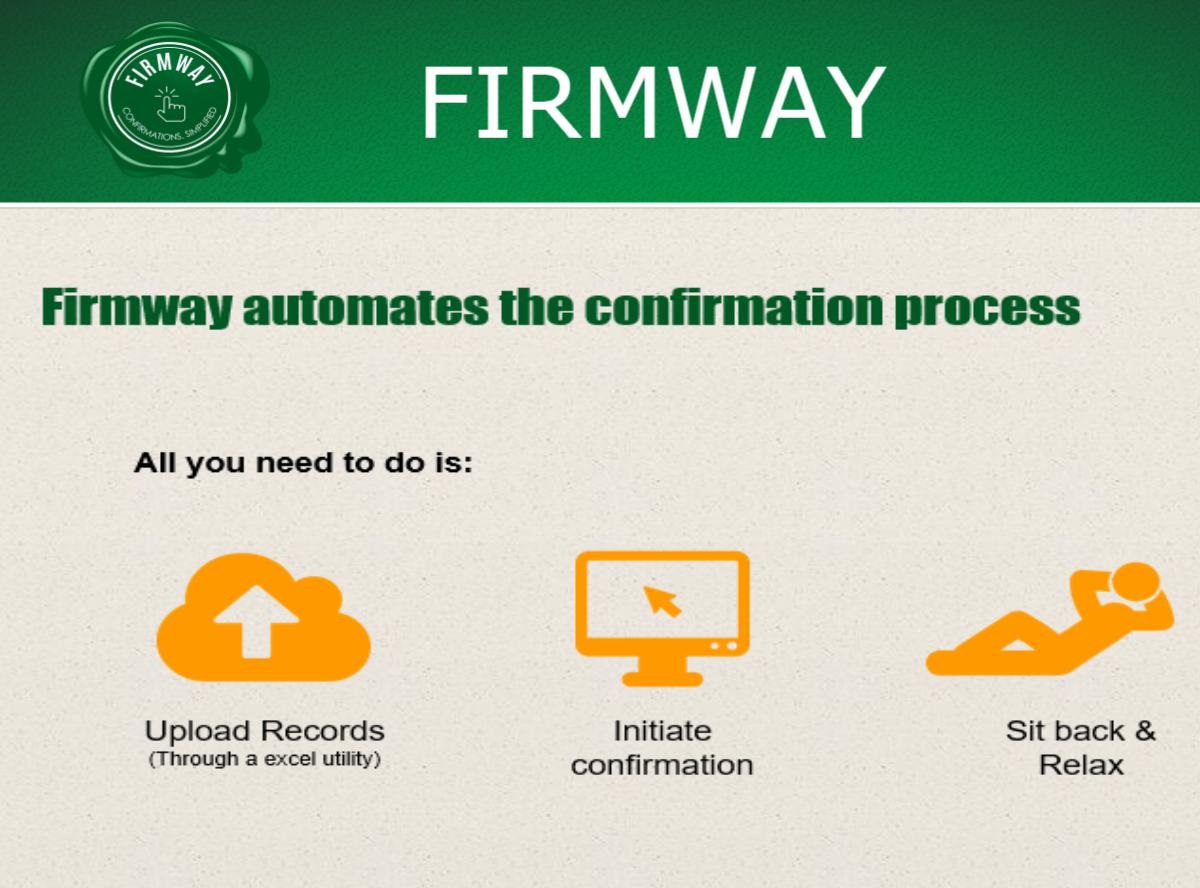
Firmway sends the Confirmation, Verifies the Confirmer, carries out regular follow-ups with the Confirmer and Summarizes Responses.

GSTR-3B

GSTR-3B Return Filing: Expert Tips And Guidelines You Need To Know

GSTR-3B: Insights

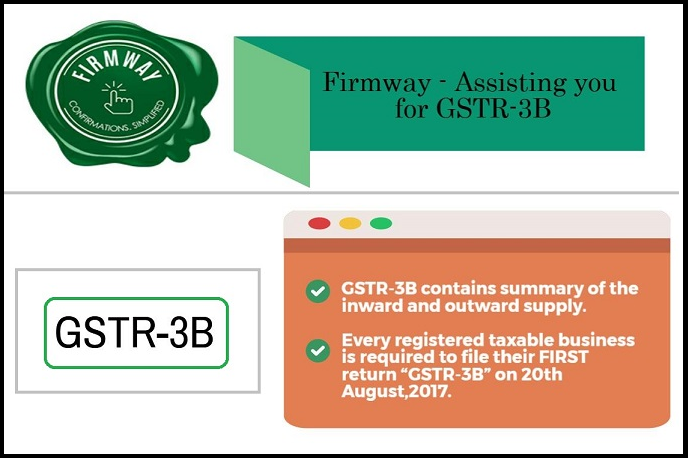
The government has published the GSTR-3B format for filing #GST returns for the months July’17 and Aug’17.

Furthermore, to ensure a smooth rollout of GST and address industry concerns about return filing, authorities decided that businesses would pay taxes based on a simplified return (Form GSTR-3B) during the first two months of GST implementation. Additionally, this form includes a summary of both outward and inward supplies, which businesses must submit before the 20th of the following month.

Moreover, the GSTR-3B form simplifies the filing process. Registered persons must submit consolidated details in a simplified manner as notified.

Introduction to GSTR-3B

The monthly GST return form effectively simplifies the GST return filing process by consolidating taxable values and tax amounts for outward and inward supplies, input tax credit, and other essential GST transactions. Furthermore, it provides a comprehensive overview of financial transactions within a specified period, ensuring accuracy and compliance with GST regulations. Additionally, this streamlined approach facilitates easier reconciliation and auditing, thereby enhancing overall transparency and accountability in tax reporting

Importance of Timely Filing

Timely filing of GST returns is crucial to avoid penalties and interest charges. Moreover, compliance with filing deadlines ensures financial discipline and prevents additional costs. Furthermore, adhering to these timelines helps maintain smooth business operations and enhances regulatory compliance.

Details to be furnished in Form GSTR-3B is as follows:

1. Outward and Inward Supplies

The tax filing form mandates that taxpayers report consolidated taxable values and tax amounts for both outward and inward supplies, including supplies liable under the Reverse Charge Mechanism (RCM). Additionally, it underscores the necessity of accurate reporting to maintain compliance with tax regulations. Furthermore, this reporting requirement ensures transparency in financial transactions and aids in preventing tax evasion.

2. Inter-State Supplies

Details of inter-state supplies made to unregistered persons, composition taxable persons, and those holding Unique Identification Numbers (UIN) must be reported in the GST return filing form applicable to such transactions.

3. Input Tax Credit

Eligible input tax credit can be claimed based on the transactions reported in GSTR-3B, subject to compliance with GST rules and conditions.

4. Exempt, Nil-rated, and Non-GST Inward Supplies

Accurate reporting of exempt, nil-rated, and non-GST inward supplies in GSTR-3B ensures compliance with GST regulations.

5. Payment of Tax and GST TDS/TCS Credit

The GST return form also requires taxpayers to provide details regarding the payment of tax and GST TDS/TCS credits, ensuring comprehensive reporting of financial transactions under GST.

GST returns will have to be filed for the months of July and August 2017 as per the timeline given below:

GSTR-3B

Firmway’s Role in Assisting with GSTR-3B

Firmway assists businesses in aligning with vendors and customers, thereby ensuring timely filing of their first GST return within a week. As a result, this prevents unintentional interest costs, helping businesses maintain financial efficiency and compliance

Conclusion

The simplified GST compliance process for businesses not only facilitates but also streamlines the return filing process. Moreover, timely and accurate filing is essential to avoid penalties and maintain compliance with GST regulations.

[/vc_column_text][/vc_column][/vc_row]

GST

GST Registration: What You Need to Know to Drive Growth

Would only registration lay the perfect platform in Cracking Code to GST Success?

While ruling out the possibilities for any further delay in implementation of GST, Finance Minister Mr. Arun Jaitely had expressed, “Of the total 8.09 million existing tax payers, 81.1% have already registered.”

But would only registration itself  be the Cracking Code to GST?

The Importance of Financial Discipline for GST Compliance

Financial Discipline is the primary intention behind drafting the entire law from the grassroots level.
Financial Discipline also helps you find the revenue leakages and manage your business.
It also helps you allocate resources and expenses, which results in profitable outcome.

The Role of Accurate Input Tax Credit in GST

How can we expect a boy, who is not well-dressed at school entry, to stay disciplined all day? Similarly, taxpayers also need financial discipline by cleaning their books and ensuring accurate input tax credit carry-forward. Consequently, less carry-forward leads to fund blockage; on the other hand, excess invites scrutiny and interest costs.

Ensuring Precise GST Tax Credit Carry-Forward with Invoice-Level Matching

So, how to ensure precise tax credit carry-forward with invoice-level matching?

GST

Common Reasons for inaccurate input tax credit:

  1. The deductions made for quality issues, delay in delivery, damages, etc.
  2. Rejected material not sent back.
  3. In the case of works contract: approval of completed work is pending, escalation claims, scope change claims, etc.
  4. Service tax credit on advance payment.
  5. Invoice not received for Goods and Services, and so forth.

Strategies to Ensure Accurate Input Credit for GST

A. Ask your suppliers, service providers, and customers to share pending invoices, debit/credit notes, and unreported deductions or rejections.

OR

B. Get transaction and balance confirmation from suppliers, service providers, and also customers.

Leveraging Technology for Efficient GST Reconciliation

Strict deadlines for Excise & VAT returns (ending June 30, 2017) significantly affect the feasibility of this activity. Consequently, this is where FIRMWAY’s digital platform comes in, effectively expediting confirmations.
Firmway has impressively achieved 80% reconciliations (in value) within a week, and fortunately, this was accomplished with minimal accounts team involvement

 firmway.in to know more about Firmway.

Recent Blogs